
Choosing The Right Dog For Your Family
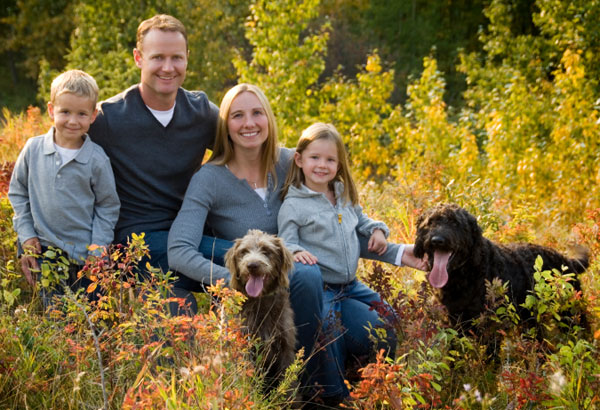
Dogs come in all shapes and sizes and choosing the right dog for your family is a very important decision. The good news is that most dogs make wonderful, lifelong companions. The bad news is that some dogs will make less appropriate pets for you than others.
Before you bring a new dog home, think about the following issues:
Choose The Right Dog For Your Family
Choosing the right dog generally means identifying the type of animal that matches your lifestyle and wants. If you live alone in a small, third-floor apartment, for instance, a large, active retriever or shepherd might not be the best choice. Conversely, if you have a family of four and are looking for a companion to match your active lifestyle, this type of dog might be perfect. Size, exercise requirements, grooming needs, temperament, and compatibility with children and adults should all figure into your decision.
Different Dog Breeds and Mixes
Take some time and learn about various breeds. The American Kennel Club site has a great wealth of information. Visit with dogs at your local shelter, and speak with an adoption counselor for guidance. Do you want a purebred dog or a mix? The only significant difference between the two is that purebreds are all members of the same breed and share common traits called the “breed standard”.
Mixed breeds are simply combinations of different breeds. If you are looking at a collie/Labrador mix he or she will have some features from both breeds. Mixed breeds offer several advantages over purebreds. When you adopt a mixed breed, you benefit from the combined traits of two or more breeds. You also get a dog likely to have less genetic defects common to certain purebred dogs. Mixed breeds, in fact, are often considered the more “natural” dog.
Visit Different Dog Breeders
The best way to ensure a long and happy relationship with a purebred dog is to purchase the dog from a responsible breeder. Take some time to visit reputable breeders in your area. Talk to your family and friends, your vet, or dog trainer for breeder referrals. Ask your breeder hard questions and if you are not 100% satisfied with the answers, move on. If you are unsure about buying a pet, please consider Adopting A Dog From A Rescue Group, dog foster organization or shelter. All dogs deserve a second chance.
Visit with Shelter Animals
While you’re at the shelter, keep in mind that it is a stressful place for any animal. Quite often, a dog’s true colors won’t show until he’s away from other animals and the shelter environment. So even if you walk past a kennel with a dog who isn’t vying for your attention, don’t count him out. He may just be a little scared or lonely.
An adoption counselor can help you select canines that will match your lifestyle. When you spend time with each dog, think about the following questions:
Puppy or Adult Dog?
You may want to select a puppy as your new companion. However, young dogs usually require much more training and supervision than more mature dogs. If you lack the time or patience to housetrain your pup or to correct problems like chewing and jumping, an adult dog may be a better choice.
Is The Dog Shy or Timid?
Although an active, bouncy dog might catch your eye, a more quiet or reserved dog might be a better match if you don’t have a particularly active lifestyle. Keep in mind that shy dogs can be very sensitive and require gentler handling, can you provide that kind of care?
Is The Dog Good With Children?
Learning about a dog’s past through a history sheet or from an adoption counselor can be helpful, but past information isn’t always available. In general, an active dog who likes to be touched and is not sensitive to handling and noise is a dog that will probably thrive in a house full of kids. Also remember that puppies under four months of age, because of their fragility and special needs, often won’t be adopted out to families with young children.
A Lifetime Commitment
Remember that your decision to bring a dog into your home should be based on the knowledge that you will love and care for your dog for his or her entire lifetime. Every dog deserves a forever home – that means you will be together for the next 10 –- 15 years. You should also consider dog training classes and using the best Dog Training Supplies. Choosing the right dog will ensure that you and your companion enjoy those years to the fullest.
For next steps, read our latest tips, Adopting A Dog From A Rescue Organization as well as Dog Supply Essentials: Preparing For Your New Dog. With a little bit of research, good judgement and lots of love, your new dog will become a fur-ever friend that will be a welcome part of the family.
For next steps, read our latest tips, Adopting A Dog From A Rescue Organization as well as Dog Supply Essentials: Preparing For Your New Dog. With a little bit of research, good judgement and lots of love, your new dog will become a fur-ever friend that will be a welcome part of the family.