
Stronger Relationships: The PupLife Interview With Dog Trainer Jane Masterson
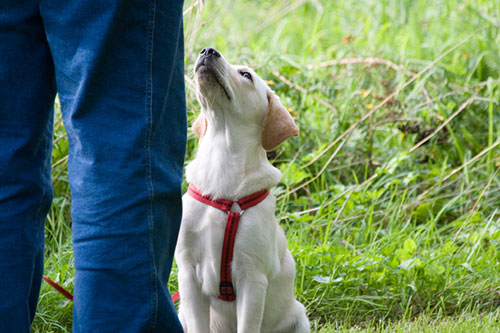
Jane Masterson has been training and walking dogs for 8 years. Inspired by Chris Bach’s “The Third Way” method and also by Ian Dunbar’s work, she uses both of these methods in her classes and private lessons at Canis Sapiens Dog Training. Jane lives in Chicago with her husband, daughter, dog, 5 cats and 2 birds.
PupLife.com: What is exciting and new in dog training?
Jane Masterson: Trainers used to focus on exercises that were done in obedience competitions, such as sit, down, stay, heel, and come. Now trainers still teach those behaviors but have added things that make living with your dog much easier and make your dog happier as well such as teaching your dog to: calm down or settle down, greet people nicely instead of jumping, walk quietly past other dogs, even how to walk on a loose leash. This is different from heeling, because your dog is not pulling you but is still able to sniff and enjoy the exciting outside world without annoying you.
PupLife.com: What are the three most common reasons dog owners come to you?
Jane Masterson: People often call about training because they are at the end of their rope. Their dog has been doing something for a long time that has been driving them crazy. Some examples include:
1. lunging, barking and snapping at people and/or dogs
2. jumping, barking and not calming down when company comes
3. biting or snapping at people if they step near the dog’s chew toy or bowl
The problem seems to be getting worse instead of better and often a major incident has prompted them to call.
The second category of people who call me had a dog like the ones in the first example. Now they have a new dog and they want to avoid having these kinds of problems with their new dog. The third category of people just say to themselves, “I’ve got a dog. I should learn how to train it.”
PupLife.com: What three behaviors would you like to see every dog owner teach their dog?
Jane Masterson: I like to watch each person/dog team develop a more satisfying relationship. The dog does something you want them to do and this earns the dog a reward that they want. This way you both enjoy the training session and your relationship with your dog becomes better.
I love the list of possible rewards from Pam Dennison’s book The Complete Idiot’s Guide to Positive Dog Training: “Your dog might like to sniff; roll in smelly things; sniff; chase toys; play tug; play with other dogs; sniff; go swimming; go for a car ride; go for a walk; jog or run; play in an open field; sniff; chase ducks, deer or geese; herd sheep; find small rodents; be petted or massaged; sniff; do agility; cuddle with you; sniff; get belly rubs; retrieve objects; eat food; pee on bushes (hopefully yours and not the neighbor’s); get attention from you; be groomed (my dogs like to be groomed); and last but not least, sniff.”

Above: The Complete Idiot's Guide To Positive Dog Training is a great guide for those wishing to train their dog without punishment.
PupLife.com: How did you get started in dog training?
Jane Masterson: I got a dog from a shelter and the traditional training methods (choke collar) didn’t work very well with him so I started to search for other methods. At the same time, while in graduate school, I started walking dogs for some extra money, the exercise and some outdoor time. I started training these dogs because I wanted to enjoy the time I was spending outside instead of being dragged down the street.
PupLife.com: Why should I go to class/private lessons when there is so much information available in books and on the internet?
Jane Masterson: Once you learn the basic techniques of dog training you can continue to Train Your Dog Using Books or internet sources but it is usually easier to start learning under the watchful eye of a good dog trainer. Your body postures, movements and timing are very important and it is much easier to get it right if you have a coach. Also, you will learn how to avoid inadvertently reinforcing a behavior you don’t want a dog to do.
You will also learn to get a dog to do a behavior that you want by rewarding very small steps in the right direction. You can build a three minute stay from a three second stay. This way the dog doesn’t lose interest and you don’t get discouraged because you will be progressing toward the desired behavior.
PupLife.com: How should one pick a dog trainer?
Jane Masterson: I think an easy way to get an idea of what kind of training goes on in a dog training class is to ask about what type of collars/head gear the dogs wear in class. If most dogs in class are wearing choke collars (long chain), prong collars (spikes), shock or e-collars then this trainer is using corrections. “Corrections” are behaviors done by the trainer (often a jerk on the leash) that irritate, hurt or startle dogs so that they stop doing something or so that they do something that you requested.
If dogs are wearing flat Dog Collars (buckle or snap) and dog food is used with a reward marker (word or click from a dog clicker) then this trainer is using Positive Reinforcement Training instead of corrections. This is my method. I don’t want to irritate, hurt or startle a dog if I can teach that dog the same behaviors without using these corrections. When dogs wear gentle leaders, it is tempting to just move their head away from whatever you want them to avoid and never let them learn to move their head away without your input. I do not think all dogs need gentle leaders.
After getting the information about the collars/head gear used, I would ask for a brief explanation of one way this trainer teaches a dog to (insert what behavior you would like your dog to do instead of a problem behavior that your dog is doing)
Is the trainer willing to take the time to talk to you about their methods? Ask the trainer to give you a three minute explanation and then don’t interrupt while the trainer is giving you this information. Do you understand the explanation? You don’t have to get all the details but do you understand the general idea? Ask if they work on this behavior in class or whether it is only done in private lessons.
Sit in on a class. Take a look at the collars/head gear. Are the people and the dogs having a good time? Are most of the dog/people teams getting help and making progress during the class? How many of the dogs avoid the trainer or greet her in a groveling way (body low and wiggling, rolling over and showing their tummy). If a lot of the dogs in class do this, this is a sign that corrections are being used.
Association for Pet Dog Trainers (www.apdt.com) has a list of trainers and certified trainers in your area. Just like not all doctors are good, not all certified trainers are good and some uncertified trainers are great so don’t use letters behind the name as your only criterion for picking your trainer.
PupLife.com: What new projects are you working on?
Jane Masterson: One of my long-term projects is trying to get people to think about making their dog’s walk and playgroup time more enjoyable for their dog and to actually use them as tools to enhance their relationship with their dog. Dogs love to explore different areas so I always encourage people to take a different route every day. This can be accomplished as easily as going in a different direction every day or getting in the car and driving a mile from your house to explore a new neighborhood.
Let your dog sniff things on walks. The dogs I walk are allowed to stop and sniff yet we still cover at least a mile in our half hour walk. If your dog has never been allowed to sniff on walks, they may spend their first walks that allowed unrestricted sniffing, just sniffing. This will probably change after a week or so.
I am not impressed when I see someone walking with their dog glued to their side in heel position, only letting the dog take short breaks to relieve themselves. This is a one-sided relationship. We humans have words like blind and deaf but what is the commonly used term for an impaired sense of smell? I don’t think we even have a commonly used term because our sense of smell is not as important to us, but it is very important to dogs.
Your dog’s walk is also a great time to work on your dog’s training. For five minutes of the half hour walk, work on sit, down, stay, eye contact, or whatever your dog needs. You will be amazed how much training can be accomplished with a daily 5 minute session. If your dog is pulling you, eating trash, barking, lunging, or jumping, sign up for a class that can help you work on these problems. The walk should be enjoyable for both of you!
What if you go to a doggie playgroup/park instead of walking your dog? I still recommend walking different routes to the park and doing a little training on the way home. Make sure your dog is enjoying the time you spend at the dog park/playgroup. Some dogs don’t enjoy playing with other dogs and others stop wanting to play with other dogs at about two years old. This can be a problem because after two years of going to a dog group, the humans have usually bonded strongly with the other humans.
A nice alternative is a dog walking club. You meet your friends and their dogs in a spot where the dogs can walk on long training lines and explore and the humans can socialize while they walk. Pick different areas to explore and everyone will have a good time.
To learn more about Jane Masterson, visit her web site at www.canissapiens.com.
Related Dog Training Tips
Bringing A New Dog Home: Teaching Two Dogs To Get Along
How To Teach Your Dog To Come When Called
Top 3 Mistakes New Dog Owners Make