
Dog Heartworm Treatment And Prevention Tips

With heartworm season fast approaching (and never actually going dormant in warmer climates), now is the perfect time to talk about heartworm treatment and prevention. The following information is provided as a general primer. PupLife.com does not sell heartworm medicine, and we strongly recommend that dog owners talk to their vet before utilizing any heartworm medication or treatment.
Dog Heartworm Information
Heartworm disease is a potentially fatal condition caused by parasitic worms living in the heart and pulmonary arteries of dogs and other mammals (including wolves, coyotes, foxes and other wild canids). Heartworms belong to the roundworm family and are clinically classified as Dirofilaria immitis.
Disease Transmission: Beware the Mosquito
The disease is not spread directly from dog to dog, rather transmission of heartworm requires an intermediate host: the mosquito. Spread of the disease therefore coincides with the mosquito season. Adult heartworms in an infected dog produce offspring, called microfilariae, which circulate in the the animal’s blood. When a mosquito “bites” that infected animal, it sucks out blood containing the microfilariae. After about two weeks in the mosquito, the microfilariae become infective larvae. This step is necessary for the transmission of heartworm, because when the mosquito bites a pet dog or cat, the infective larvae are transmitted.
Heartworm Symptoms
Dogs infected with heartworms can live several years before manifesting any symptoms. Consequently, the disease is diagnosed mostly in 4 to 8 year old dogs, and is seldom identified in a dog under 1 year of age. This is because the young heartworms (larvae) take up to 7 months to mature following the initial infection. Although some dogs will not show any symptoms, the most obvious indicators are cough, exercise intolerance, abnormal lung sounds, difficulty breathing, enlargement of the liver, fluid accumulation in the abdominal cavity, and abnormal heart sounds.
Keeping your pet in tip top shape is always a great idea, especially in the warmer months. Walking your pet every day keeps your pet active and increases the bond between pet and guardian. Always walk your dog on a durable Dog Leash and make sure your pet's Dog Collar has an up to date Dog I.D. Tag. Waterproof dog collars are great for pets that enjoy playing in the water or frequently get muddy.
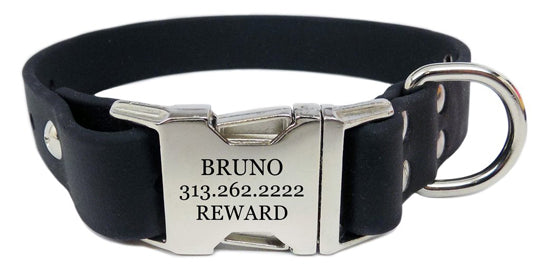
Above: This Waterpoof Dog Collar from RitaBean.com comes in lots of colors, and has free engraving on the buckle. We love it!
Heartworm Prevention
A common misconception about heartworm prevention medications is that they ‘prevent’ heartworm infection from occurring at all. That is not quite correct. Most types of prevention medications kill existing microfilaria but do not prevent them from entering the body.
Before beginning a prevention program, a blood test must be given by a veterinarian to determine that the dog is not already infected. The preventative should be administered from early spring until the end of December in cooler climates or it may be taken year round. As a safeguard, many veterinarians recommend annual or biannual screening tests even for dogs that are on heartworm preventatives.
Dog Heartworm Treatment
Most dogs can be successfully treated for heartworms if the disease is detected early. If you suspect your dog may have heartworms, seek the advice of a qualified veterinarian immediately.
Usually a vet will recommend treating the patient in the following manner: Adult worms are killed with an organic arsenical drug given through a series of carefully administered injections. A few days after treatment, the worms die and are carried by the bloodstream to the lungs. There they decompose and are absorbed by the body over a period of several months.
Following treatment, complete rest is needed to prevent lung damage from the dead and decomposed worms. Excitement and exercise should be avoided for at least a month, followed by gradual return to normal activity. After all adult heartworms are eliminated, another drug must be given to rid the bloodstream of microfilariae, which are not affected by the drug used to kill adult heartworms.
Keeping Your Dog Healthy
Today, the majority of dogs with heartworm disease survive. Most can be treated with medication, some requiring surgery. Unfortunately there are those few that do not survive the devastating effects of the disease. With prompt detection, needless suffering can be prevented.
It is important to remember that heartworm disease is preventable! Consult your veterinarian for an appropriate prevention program for your dog. With warmer temps on the way, our Dog Owner's Guide To Spring article has plenty of tips that can help your pet stay healthy. Many dog owners ask Should You Buy Pet Insurance? and that's also something to consider. Please pay close attention to your vet’s recommendations and advice regarding heartworm prevention – your dog’s life may depend on it.