
How To Teach Your Dog To Come When Called

When you call your dog to come, does he ignore you? Don’t feel jilted! He simply needs to learn a recall cue.
Teaching Your Dog To Come When Called
Many dogs will ignore their owner’s plea to come when called because they have never had an incentive to do so. Why should a dog stop doing what he loves like sniffing for squirrels to come inside? For some yummy Organic Dog Treats, of course!
Above: Full Moon makes a human grade Organic Dog Training Treat that is perfect for training.
Teaching your dog to come when called works best when your dog already knows his name and has a decent food drive. Using Positive Reinforcement Dog Training, you can teach your dog to come when called. Here are some dog training tips that will help.
Teach Your Dog A Recall Cue
First, take your dog to a fenced-in yard or a contained park. Using a Quality Dog Collar and Long Line Training Leash, allow your dog to explore the surroundings. When your dog is distracted, call his name (Fido!) followed by the cue (Come!).
When he turns and looks toward you, use your indicator word (Yes!) or Dog Training Clicker and start moving backward encouraging him to chase you. When he catches you give him lots of treats. Be sure to release him (Okay!) and then repeat the exercise.

Above: This simple Dog Training Clicker is affordable and gets the job done. For more advance clicker training methods, we recommend Karen Pryor's Clicker Training Starter Kit.
If your dog doesn’t turn and orient toward you, pick up the end of the leash and moving backward, gently bring him into you. Experiment with the length of the leash – dogs who are easily distracted by elements in the environment may need to start on a shorter leash (for instance a standard 6-foot leash). When your dog can respond reliably on the 6-foot leash, move up to a 20-foot leash, then a 30-foot leash.
Practicing The Come When Called Command
Keep in mind, most dogs will need lots and lots of practice on Leash before the can respond reliably to the recall off-leash. Also be aware that high-value distractions like other dogs, squirrels, rabbits, and deer may take precedence over your food reward. This is why it is so important to practice the recall with a long leash so that you can enforce the cue every time. Repetition is key!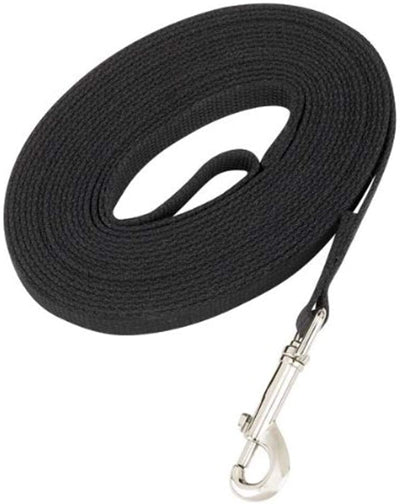
Above: This cotton Long Line Training Leash is a favorite of ours. Durable, simple and perfect for training the come when called recall cues.
Training The Fun Way: Play The Recall Game
Here is a fun recall game you can play in your backyard and it will reinforce the recall cue – increasing the chances that your dog will come when called when you are not playing the recall game. You will need a friend or family member to assist you. Standing some distance apart from the other person, take turns calling your dog giving him a treat each time he runs to you. This is a fun and easy way to teach the recall cue and best of all, it keeps the learning experience positive and rewarding for both you and your dog.
Better Dog Treats Make Better Rewards
Final notes: Make sure the treats you are using for training are irresistible to your dog. Remember if he is indifferent to the treats, his incentive to obey your command decreases accordingly, so using top quality dog training treats is a wise move. If you need to move to smaller treats, or are not dedicated to organics, there are some great dog training treats on the market today.
If you just adopted a dog, or are celebrating a new puppy, here is a great way to Teach Your Dog To Recognize Their Name. Expand your dog training skills by Teaching Your Dog To Fetch and also Teaching Your Dog The "Drop It" Cue. With lots of practice and a little bit of love, you can teach your dog just about anything!